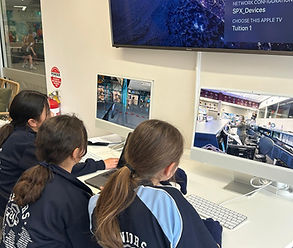
VR in education uses immersive virtual reality experiences to help students explore places, concepts, environments, and scenarios that may be difficult, expensive, unsafe, or impossible to access in a traditional classroom. In Australian schools, VR can support curriculum-aligned learning by making lessons more engaging, visual, and interactive.
VR helps students build understanding through experience. They can investigate real-world topics, explore 360° environments, practise digital skills, collaborate on projects, and create their own immersive content. When used with clear learning goals, VR can support curiosity, creativity, critical thinking, communication, and deeper engagement across subjects such as Science, Geography, History, English, STEM, sustainability, and digital technologies.